

Sauce it Up with Plants
Adding plants into sauces is one of the easiest, most flavorful ways to boost nutrition classic pasta dishes. Whether you’re making pesto, marinara, or macaroni-and-cheese (dairy or vegan), simple swaps and additions—greens, herbs, vegetables, nuts, and legumes—can elevate texture, color, and nutrients without sacrificing comfort. Below are practical methods and recipe ideas to help you fold more plants into beloved sauces while keeping flavors balanced and familiar.
Why add plants?
Better nutrition: more fiber, vitamins, minerals, and phytonutrients.
Improved texture and volume: greens and vegetables bulk sauces without extra oil or processed ingredients.
Flavor complexity: fresh herbs, roasted veg, and toasted seeds add brightness, smoke, nuttiness, or umami.
Cost-effective and seasonal: use whatever’s on hand—collard greens, kale, spinach, zucchini, carrots, beets, or seasonal herbs.
General tips for adding plants to sauces
Purée or finely chop: Blended greens or cooked vegetables incorporate smoothly into sauces. Use a blender, immersion blender, or food processor.
Sauté first when needed: Heartier greens (kale, collards) or vegetables (onion, carrot, bell pepper) benefit from sautéing to soften and develop flavor before adding to sauce.
Use cooking liquid: Save pasta water or vegetable broth to adjust viscosity. Starchy pasta water helps emulsify and thicken.
Balance flavors: Add acid (lemon, vinegar, wine), salt, and umami (miso, nutritional yeast, tomato paste, soy sauce, roasted mushrooms) to counter any vegetal bitterness or grassy notes.
Layer textures: Mix puréed and roughly chopped elements (e.g., puréed spinach with toasted pine nuts, or mushroom ragù with a spinach pesto swirl).
Don’t overcook delicate greens: Baby spinach, arugula, and basil lose vibrancy fast—add them at the end or briefly wilt them.
Roast for sweetness and depth: Roasting root veg or peppers caramelizes sugars and reduces bitterness.

Pesto: reinventing a classic with more plants Traditional pesto (basil, pine nuts, garlic, olive oil, Parmesan) is a great canvas for greens and seeds. Pesto is forgiving—use equal weights of greens and herbs for bright flavor.
Base ratios and method
About 3–4 cups packed greens/herbs (or mix greens + herbs) to 1/2–3/4 cup nuts or seeds, 2–3 cloves garlic, 2–3 tablespoons lemon juice, salt to taste, 1/4–1/2 cup olive oil or neutral oil, and optional 1/4 cup nutritional yeast for cheesy tang. Regular cheese is okay.
Lightly toast nuts/seeds for depth. Add garlic, nuts, and lemon to a food processor, then add greens and blend while drizzling oil until you reach the desired texture. Adjust salt and acidity.
Plant-forward pesto ideas
Kale + Walnut Pesto: Use de-stemmed kale + fresh parsley + toasted walnuts. Sauté kale briefly with garlic if raw kale tastes bitter, then cool before processing.
Collard + Almond Pesto: Blanched collards (or sautéed), roasted almonds, lemon, and nutritional yeast for a smoky, substantial sauce perfect for thick noodles.
Arugula + Sunflower Seed Pesto: Peppery arugula plus toasted sunflower seeds gives a budget-friendly, bright pesto. Add lemon for brightness.
Spinach + Basil + Hemp Seed Pesto: Mild spinach stretches basil—hemp seeds add creaminess and an omega boost.
Herb-forward: Mix basil, parsley, cilantro, and mint for multilayered freshness—great with lemony pasta and grilled veg.
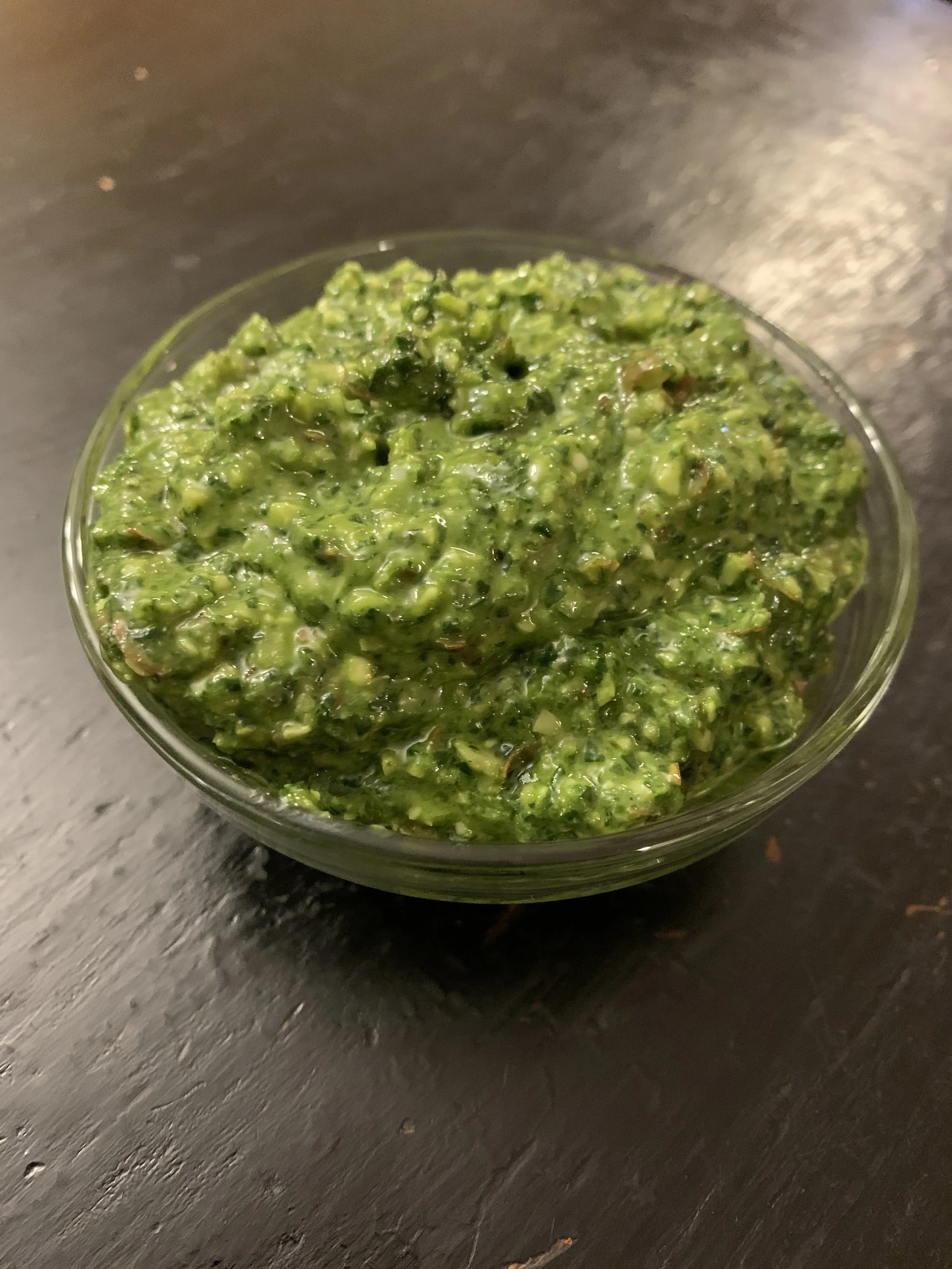
Pesto can be made with collards, spinach, basil or mixed greens

Yoga and Spiritual Book & Journal by Brooke Brimm
Uses and variations
Stir into hot pasta with reserved pasta water to create a silky emulsion.
Toss with roasted vegetables and beans (chickpeas or white beans) for a hearty bowl.
Use as a sauce base and add sautéed mushrooms or caramelized onions for extra umami.
Marinara: sneaking more veg into tomato sauce Marinara is forgiving and pairs well with a wide range of vegetables blended in or cooked down to become part of the sauce body.
Technique
Start with a soffritto: sauté chopped onion, carrot, celery, and garlic in olive oil—this adds sweetness and builds a savory base.
Add crushed tomatoes, tomato paste for concentrated flavor, herbs, and cooked vegetables. Simmer until flavors meld.
Purée part or all of the sauce for smoothness, or leave it chunky.
Vegetables to add
Carrots and celery: Traditional soffritto adds natural sweetness and body.
Bell peppers: Roast first for sweetness and smoky notes; purée into the sauce.
Mush
